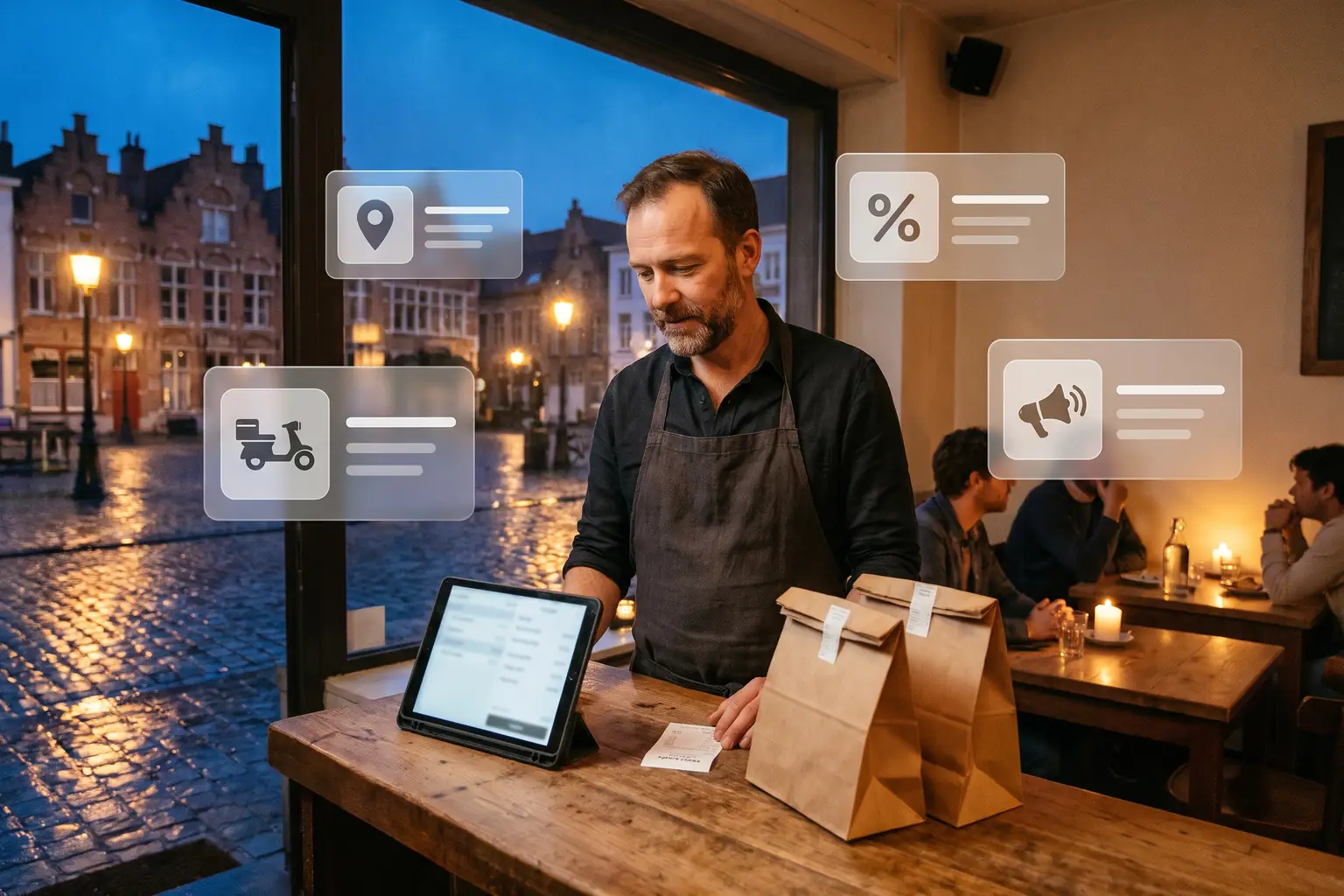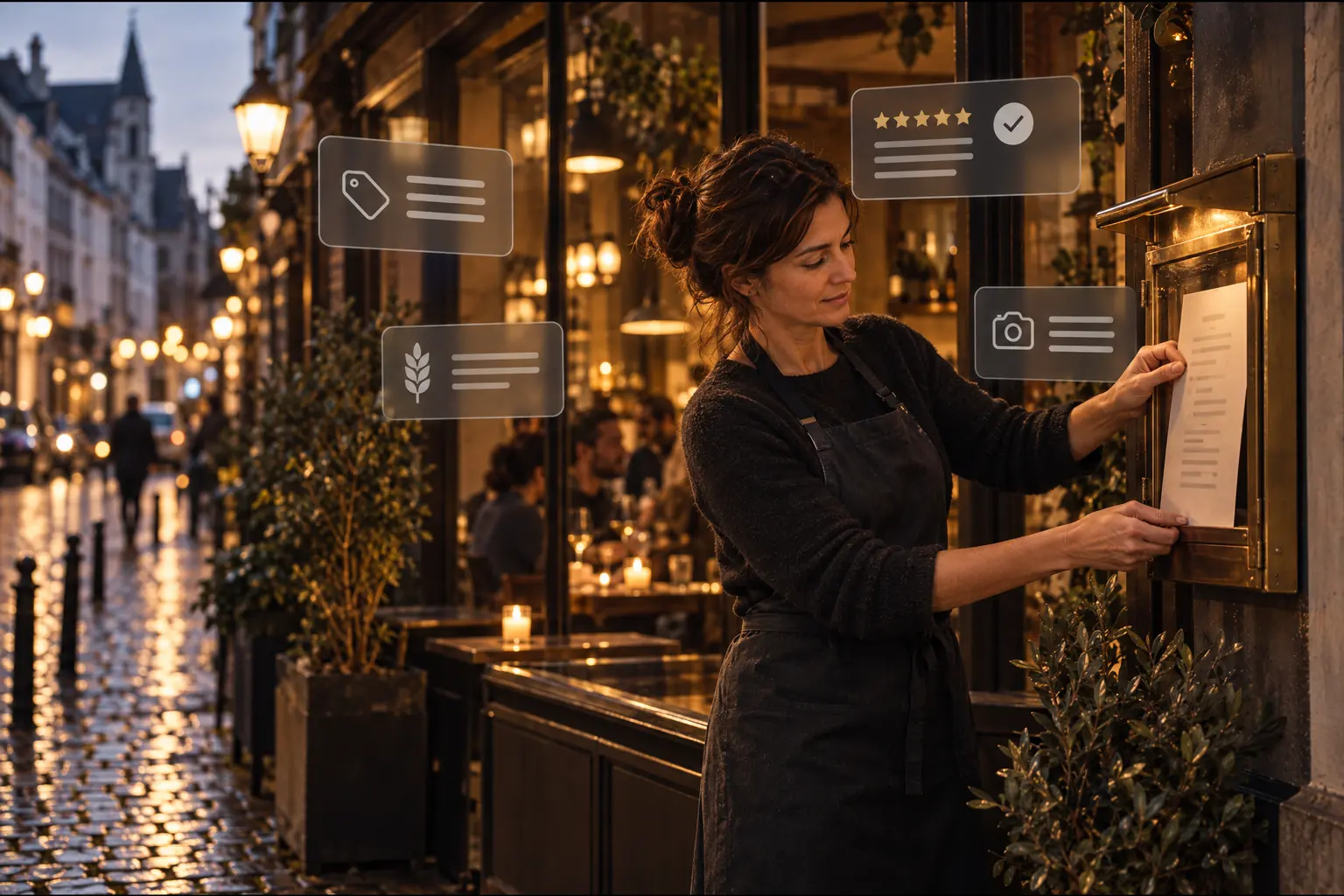
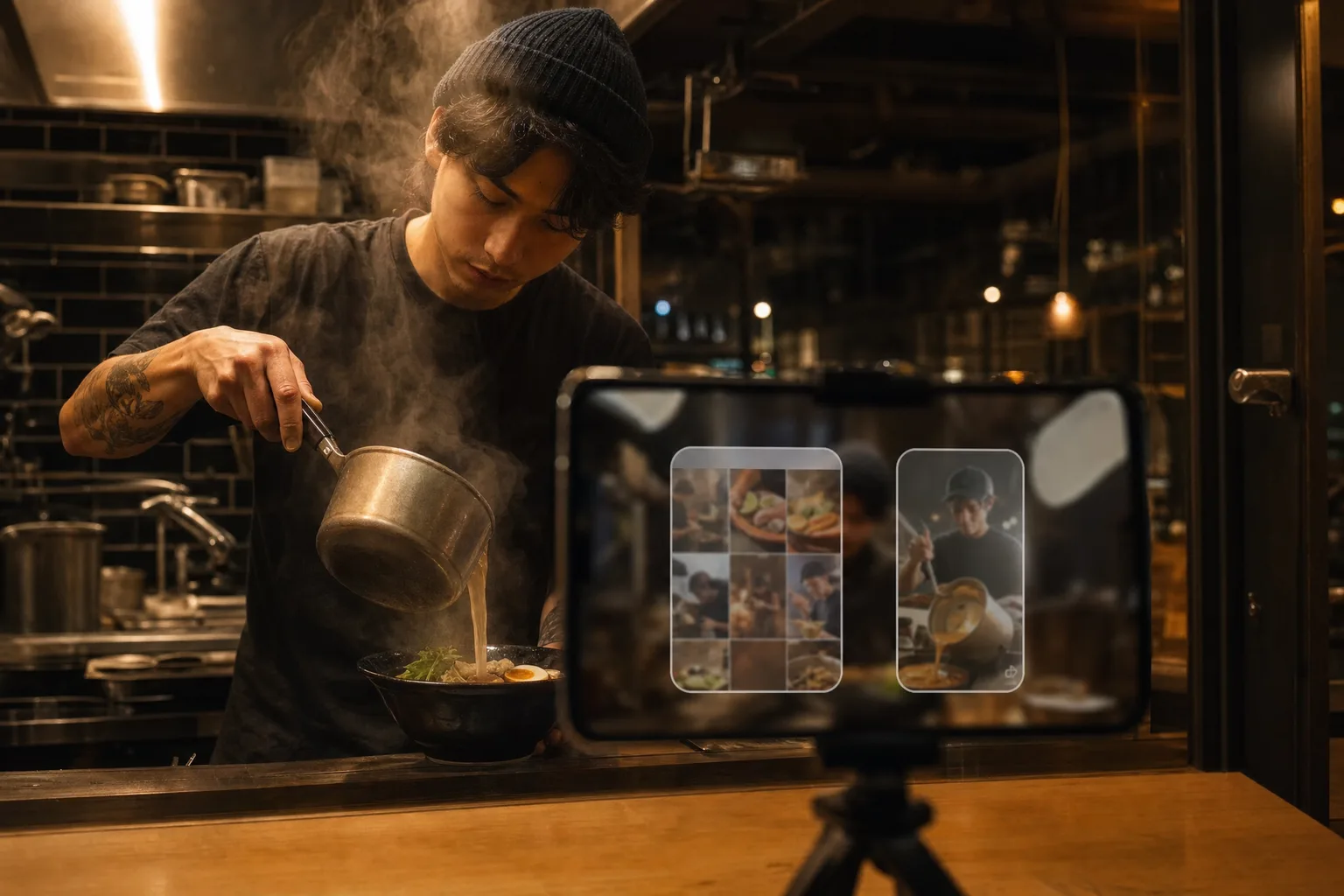
The question comes up at every first meeting with a restaurant owner: "Do we have to be on TikTok?" or, more often, "Is Instagram still worth it?". The honest answer is that both are useful, but not for the same thing, and an owner who runs services has no time to do both properly. Here is what we see on the Brussels restaurants, bars and clubs we work with, and the order to tackle them.
What Instagram does for a restaurant
Instagram is the business card. When someone hesitates between two places, they type the name on Instagram before Google, look at the first three rows of photos and decide in ten seconds. The grid has to answer one question: do I want to be there tonight? The dishes, the room, a Friday atmosphere, the gesture in the kitchen. Not the logo, not the monthly promo as text on a red background.
It is also the network where your existing customers follow you, tag you and recommend you to their friends. Daily stories (the dish, the remaining tables, the terrace open) reach people who have already been and live nearby. And it is the platform Meta uses for ads, the ones that can be measured down to the booking.
What TikTok does for a restaurant
TikTok does not talk to your customers, it talks to strangers. The algorithm shows your video to people who do not know you, in Brussels and far beyond, based on what they watch. A good kitchen shot, a broth being poured, a cut, an owner explaining a dish in thirty seconds: these videos travel. It is the network that makes a concept known, the one that fills a room with people who would never have typed your name.
The downside: reach is unpredictable and views do not all turn into covers. A client showed us a video with 400,000 views that did not fill a single extra table, because it was seen everywhere except Brussels. TikTok works when the content makes people want to come and says where, not when it makes them laugh.
What we measured
A ramen restaurant in central Brussels went from €70,000 to €130,000 in monthly revenue between November and December 2025, with under €500 of advertising over the whole period. The same footage, filmed every week by our team, was edited for Instagram and for TikTok. The owner never appears: the kitchen does. It was not the platform that made the difference, it was the rhythm and the fact that every video showed why you come.
A cocktail and tapas bar in the centre saw its revenue go from €50,000 to €130,000 in August, with videos filmed on site, a Google profile taken back in hand and Meta campaigns targeted on the neighbourhood. There too, Instagram was the shop window and the ad platform, TikTok the amplifier.
Where to start, depending on your situation
- You are opening, or nobody knows you outside the neighbourhood: TikTok first, three videos a week for two months, always with the name and the neighbourhood on screen. Instagram alongside, with the same videos, no extra effort.
- You are doing well, but bookings depend on word of mouth: Instagram first, with a clean grid, stories on every service day, and a Meta campaign of a few hundred euros a month measured down to the booking button.
- You have a strong concept (a rare cuisine, a show in the room, a signature dish): both, with TikTok as the priority to make the concept known. It is the only case where TikTok deserves a dedicated effort.
- You have time for neither: one video a week, filmed during a service, posted on both. A steady rhythm beats a week of five videos followed by a month of silence.
The three mistakes we fix most often
- Filming the owner talking to camera when they do not want to. It shows, and it does not make anyone hungry. Camera on the hands, the dishes and the room, the owner in voice-over if they wish.
- Posting a photo of the menu or a poster. Nobody shares a poster. A fifteen-second video of the dish arriving at the table will be saved and sent to friends.
- Not answering comments and messages. A question "are you open on Sunday?" left unanswered is a lost table and a signal to the algorithm that the account is dead.
And Google in all this?
Neither Instagram nor TikTok replaces the Google profile. That is where every journey ends: the name typed, the hours, the reviews, the directions. A TikTok account that explodes with an empty or badly rated Google profile is a leaking bucket. The three hold together: TikTok makes you known, Instagram makes people want to come, Google confirms and brings them in.
Want to know which of the two networks would bring the most to your room, with your concept and your neighbourhood? Send us the restaurant’s name on WhatsApp. We look at your accounts, your Google profile and your three most visible competitors, and we answer in writing. Free, no strings attached.